 Readit News
Adobe | Rendering Software Engineer in Test | On-site or remote, US or Western Europe
We’re a close-knit, remote-first team of engineers building next-generation, interactive rendering technology that powers a growing portfolio of high-profile creative tools, including the Substance suite of products.
We’re looking for a software engineer with a passion for computer graphics —real-time or offline— to lead and evolve our quality engineering efforts. This role combines strong software engineering skills with a deep focus on rendering quality and infrastructure. As part of the core rendering team, you’ll contribute C++ code, build tools and tests, and play a key role in ensuring the renderer stays fast, stable, and visually correct across diverse hardware.
Fee free to reach out if you have any questions, my email is in my profile.
https://careers.adobe.com/us/en/job/R154963/Rendering-Softwa...
franzb commented on Writing your own C++ standard library from scratch nibblestew.blogspot.com/2... · Posted by u/JNRowe
This is an unnecessarily combative comment.
The author doesn't claim to be implementing the C++ standard library. They clearly say they are implementing a C++ standard library.
It's obvious from the context that they mean a hobby-scale set of basic datatype and algorithm libraries. It would take an uncharatible reading to not realize that they mean a lowercase "standard library", not "conforming implementation of the ISO C++ Standard Library".
The article literally says "It's my time, and I'll waste it if I want to!" and uses "pystd" as the namespace.
What makes his library “standard”?
franzb commented on Apple's On-Device and Server Foundation Models machinelearning.apple.com... · Posted by u/2bit
For people interested in AI research, there's nothing new here.
IMO they should do a better job of referencing existing papers and techniques. The way they wrote about "adaptors" can make it seem like it's something novel, but it's actually just re-iterating vanilla LoRA. It was enough to convince one of the top-voted HackerNews comments that this was a "huge development".
Benchmarks are nice though.
This isn't about AI research, it's about delivering AI at unimaginable scale.
franzb commented on Super Heavy has splashed down in The Gulf of Mexico twitter.com/SpaceX/status... · Posted by u/thepasswordis
I've got the black and white arty photo as my lockscreen which gives you an idea https://cdn.mos.cms.futurecdn.net/E46BxzjjUkpthVBNE6k8mn-192...
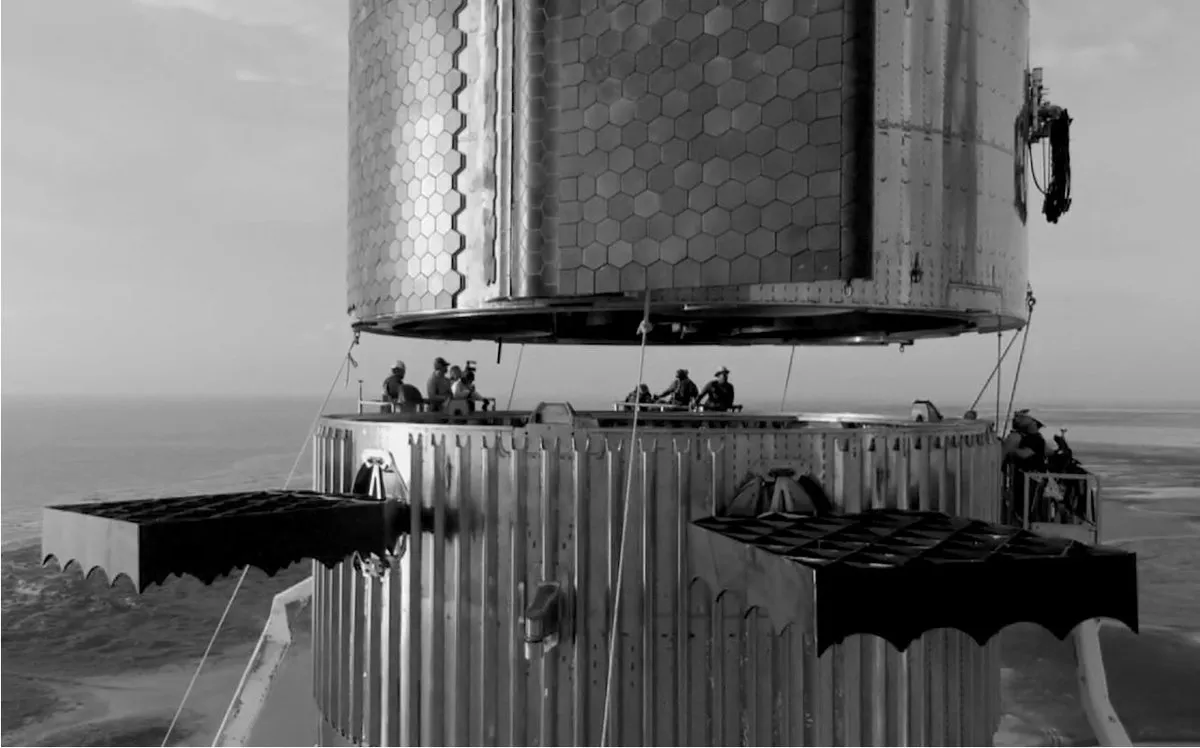
A striking picture! Thanks for sharing!
franzb commented on Extracting concepts from GPT-4 openai.com/index/extracti... · Posted by u/davidbarker
I want to be able to view exactly how my input is translated into tokens, as well as the embeddings for the tokens.
For your first question: https://platform.openai.com/tokenizer
As annoying as it is, I remember a channel I subscribed to once mentioned that they did a little AB experimentation and turns out “surprised face” thumbnails do actually attract more views.
Understandable but unbearable: these aren’t mutually exclusive.
I use https://addons.mozilla.org/en-US/firefox/addon/clickbait-rem... - it replaces thumbnail with a frame from the video.
A dumb thumbnail is a useful signal to know that I won’t want to watch the video anyway :)
What gets executed is a direct mapping of Python semantics to hardware. In that sense, this is more “direct” than most systems running Python.
This phrasing is about conveying the architectural distinction: Python logic executed natively in hardware, not interpreted in software.