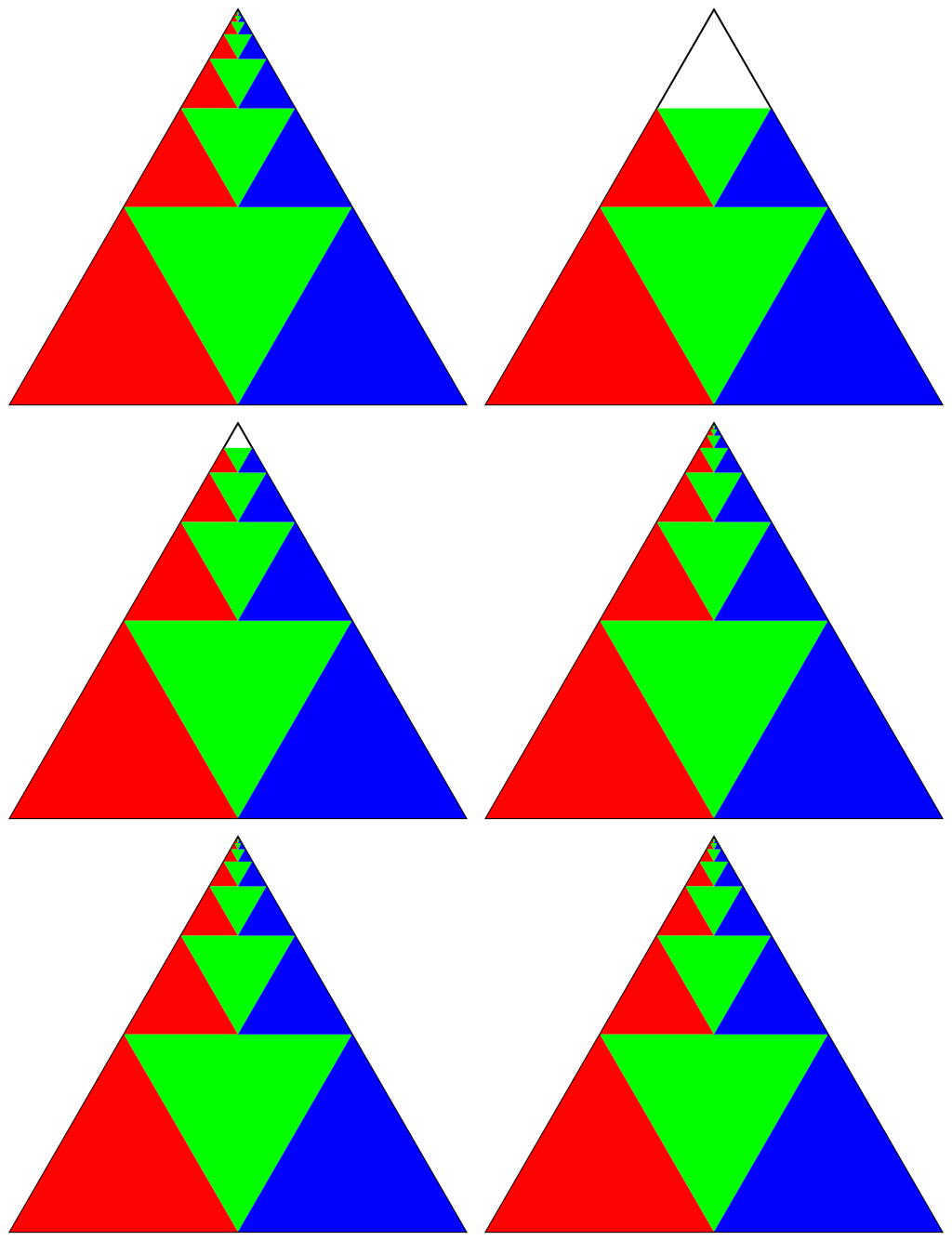
1/3 = 1/4 + 1/16 + 1/64 + ...
https://evanberkowitz.com/images/2014-03-15-quarters/SquareA...https://evanberkowitz.com/images/2014-03-15-quarters/Triangl...
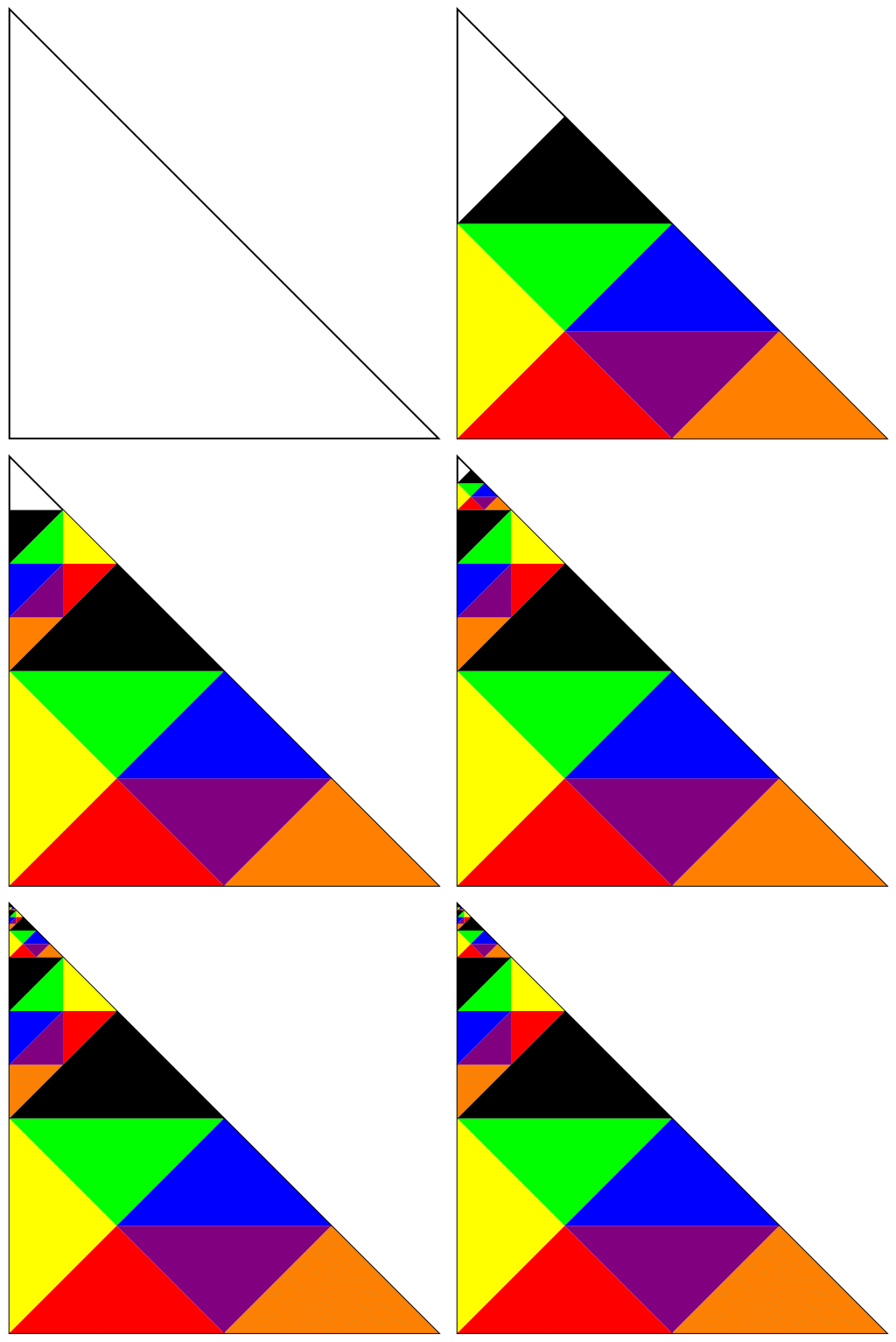
1/7 = 1/8 + 1/64 + 1/512 + ...
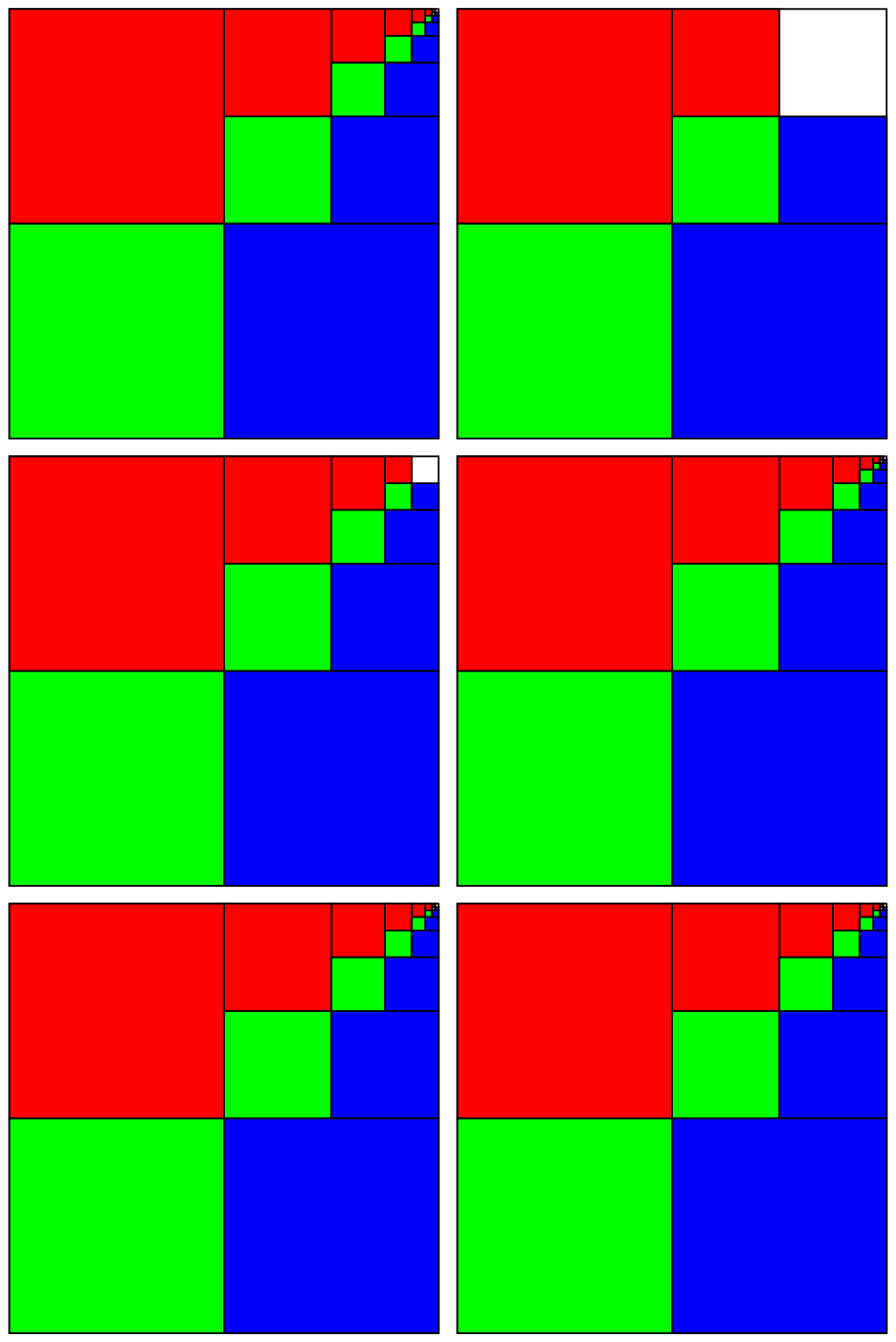
https://evanberkowitz.com/images/2014-03-16-eighths/EighthsA... 1/8 = 1/9 + 1/81 + 1/729 + ...
https://evanberkowitz.com/images/2014-03-17-ninths/NinthsAni...Btw, note that it was not actually a Roman salute (though it may have been adopted by Italian fascists because they incorrectly believed it had been used by the Romans; they were keen on Roman iconography).
Nope. This is incorrect. The dot product is a weighted sum of a vector's elements, where the weights are the elements of the other vector. Weighted sum of two vectors would require a third entity to provide the weights.
On the other hand, it is common to need a metric, which is actually the set of weights in the dot product. If `g` is the metric,
dot(a, g, b) = np.einsum('x,xy,y->', np.conj(a), g, b)
g doesn't have to be diagonal, but if you want the dot product to be symmetric in a and b it ought to be self-adjoint. Then you can find a basis where g is diagonal with real diagonal elements, which you can interpret as the weights.I think this is slightly inaccurate. The butterfly effect is about the evolution of two nearby states in phase space into well-separated states. But the parameter a is not a state. To see the butterfly effect by changing a we would need to let the system settle down, give the parameter a small change, and then change it back. The evolution during the changed time acts as a perturbation on states.
Instead, showing that the attractor changes qualitatively as a function of the parameter is more akin to a phase transition.
Would an upgraded version of this that was actually capable of capturing the progress of a single laser pulse through the smoke be a way of getting around the one-way speed of light limitation [0]? It seems like if you could measure the pulse's propagation in one direction, and the other (as measured by when it scatters of the smoke at various positions in both directions), this seems like it would get around it?
But it's been a while since I read an explanation for why we have the one-way limitation in the first place, so I could be forgetting something.
While the video doesn't touch on this explicitly, the discussion of the different path lengths around 25:00 in is about the trigonometric effect of the different distances of the beam from the camera. Needing to worry about that is the same grappling with the limitation on the one-way speed.