Thank you both, it means a lot. I try to make it clean, but fun and personal too.
Can say the effort you put in setting that up was worth it. Fantastic work in both making the generator and sharing it!
 Readit News
Anyway, this isn't a critique of your work, just my personal perspective.
I had to go and double check because a fact I was certain of was the PT Cruiser was designed to be classified as a light truck in order to require a lower CAFE standard, far before the 2008 reform. I’m sure there are many examples of this. The system in general is gamed aggressively. I can give a recent example:
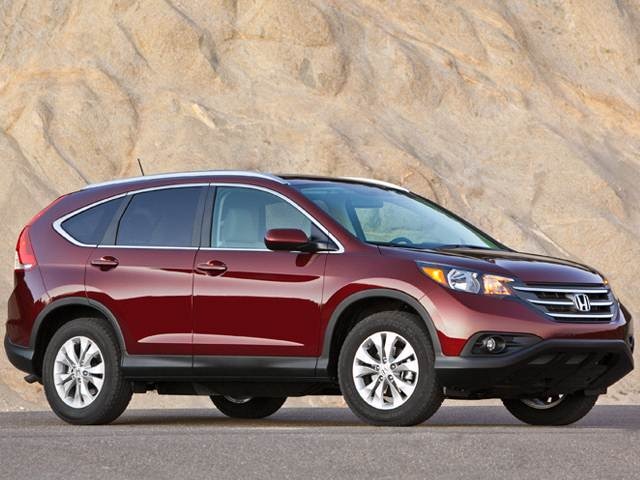
The Honda CR-V. Look at the front bumpers of a European and US spec car
European: https://upload.wikimedia.org/wikipedia/commons/4/4a/Honda_CR...
US: https://file.kelleybluebookimages.com/kbb/base/house/2012/20...
The difference in front bumpers is due to a front approach angle requirement in CAFE’s regulations (18 degrees, off the top of my head?) to get a light truck classification.
Footprint isn’t really the issue. It’s related, and certainly why cars are getting bigger than they once were, but to my understanding the bounds of footprint for each classification hasn’t changed since the legislation was brought in, while cars are ballooning regardless. I think part of it is just consumer preference for more car.
[1] https://en.wikipedia.org/wiki/Corporate_average_fuel_economy
[2] https://web.archive.org/web/20081216085824/http://www.nhtsa....
Wonder if books are inherently easier because their content is purely written language? Whereas movies and art tend to have less point by point descriptions of what they are.
Automakers need to take the stance that their cars are to be operated as-is. Claiming it’s not tuneable is important for appearances.
Nissan simply could’ve never acknowledged it. Instead made a point that the GT-R was untuneable, which to my knowledge, is the only time a car company has claimed such a thing.
To paraphrase one of my favourite motoring journalists (translated):
"Will EVs kill motoring? No, but only because it's already dead - tuning died several years earlier. EVs are only a transition technology. In 30 years driving will be this lame thing that only old people do."
I find it hard to seriously disagree with him on that.
I think tuning needs a readjustment in perception. We’ve removed one way to tune, power, and I guess it’s more difficult to get excited about suspension geometry or alignment or handling balance vs a big shiny Garrett turbo, but the fact is we’re still talking about boxes with four wheels at the bottom. Tuning is, and always has been, about how to make a car use those tyres to their full effect.
The GT-R, as impressive as it was, also had its detractors for being a computer on wheels. Car lovers have always disliked techy cars and longed for simpler driving experiences. I know people who still insist carbs are better. I don’t see why the Plaid couldn’t have made Porsche miserable in all the same ways the GT-R did.
It was a performance bargain at launch, but the rest of the automotive world has been catching up. You can now get nearly the same track performance at almost half the price.
The R35 will always retain a special place in the automotive world for being an AWD turbo platform with a lot of modification headroom. I’m not too surprised they’re discontinuing it after 15 years though.
Maybe if the driver cares about performance, but is only capable of using their right foot. The only enthusiasm is being pushed into the seat at the peak of the traction of the tyres, for all of a moment before the speed limit restricts them again. All without any other theatre. I can see the appeal of being able to have that performance without drawing attention to yourself, but then you specifically clarify your statement by excluding tracks or technical (fun) roads.
…Strangely, I thought I liked the Plaid until writing this. I’m enthusiastic for what Tesla has done to the EV market, and the Model S appears to generally be a good car (all my experience is in the Model 3 my Dad has. I’d assume the experience is similar) but I can’t help but feel like they’ve made something so utterly uninteresting as their top of the line halo model. What could’ve been the GT-R of this era seems to have barely grazed the automotive community.
People like him are horrid traps for optimisers. They’re pointing out errors, and being so desperate to improve you’re encouraged to keep listening and value them greater instead of tuning their overeagerness out.
There’s an irony that actually getting hung up on minor comments and suggestions is in itself poor optimisation since the error becomes a distraction instead of a learning point.