Maybe it's mentioned somewhere but I missed it, could someone provide a list of the five problems that AlphaGeometry failed to solve? The paper mentioned IMO 2008p6 and IMO 2019p2. What are the other three?
 Readit News
hyh1048576 commented on AlphaGeometry: An Olympiad-level AI system for geometry deepmind.google/discover/... · Posted by u/FlawedReformer
Michael Nielsen (with Andy Matuschak) also wrote about how Hindu-Arabic numerals enabled more powerful kinds of thinking (compared with Roman numerals.)
https://numinous.productions/ttft/#how-to-invent-hindu-arabi...
> ...the Hindu-Arabic numerals aren’t just an extraordinary piece of design. They’re also an extraordinary mathematical insight. They involve many non-obvious ideas, if all you know is Roman numerals. Perhaps most remarkably, the meaning of a numeral actually changes, depending on its position within a number. Also remarkable, consider that when we add the numbers 72 and 83 we at some point will likely use 2+3=5; similarly, when we add 27 and 38 we will also use 2+3=5, despite the fact that the meaning of 2 and 3 in the second sum is completely different than in the first sum. In modern user interface terms, the numerals have the same affordances, despite their meaning being very different in the two cases. We take this for granted, but this similarity in behavior is a consequence of deep facts about the number system: commutativity, associativity, and distributivity
Yep. Imagine doing multiplication in Roman numerals :)
If you want to see how some very simple notations greatly simplifies some math, check out J. H. Conway's proof of Morley's theorem.
Background: Morley's theorem is a non-trivial theorem in planar euclidean geometry stated in 1899 (first proof appeared 15 years later). The proofs are not easy. One can use complicated trignometry identities to prove it. Even the "simple" proofs are sometimes quite involved.
Conway introduced some notation and almost trivialized it. The notation he introduced was just a* := a + 60 where a is the degree of an angle. No one would believe this notation can do anything good, but with them (and some other insight) Conway can explain the proof in just a few sentences! (One might think anyone who understand that the interior angles of a triangle will always have a sum of 180° can come up with this simple proof, but that just didn't happen for 100 years until Conway revealed it.)
See page 3-6 here: http://thewe.net/math/conway.pdf
A few months ago, I began developing the Buy For Life platform. It started as a simple list where people could add brands that manufacture durable products. It now evolved into a full platform with aggregated product reviews from all over the web, discussions, and various metrics to calculate a score for each brand and product.
I want to help people finding the most durable and sustainable products in the world. It should become the Rotten Tomatoes for products, almost like you check the trustworthy rating of a movie before you watch it, people could check a brand or product before they purchase it.
A metric I am working on is the average cost per month of ownership. That feels like a great metric that shifts consumer mindset - the longer you own something, the more you save. I still don't have enough data, so please submit your favourite product.
Let me know what you think!
PS: this project is completely non-commercial and entirely community-driven. It is still a work in progress, but I want to get feedback as early as possible.
Is it brand based, or product based? In the URL I see /brand/ and /product/.
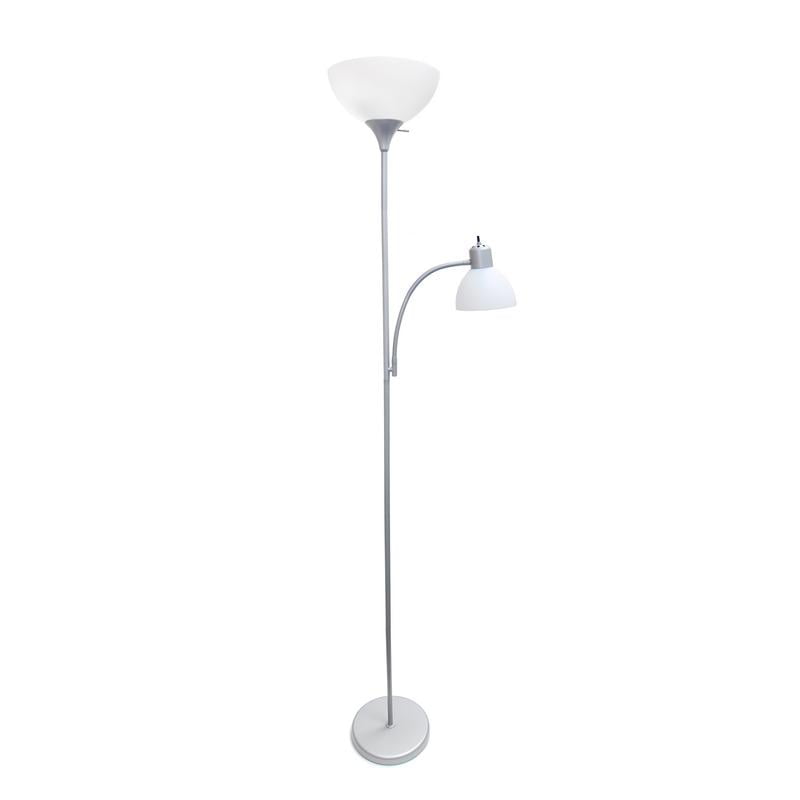
I have trouble finding reliable floor lamp like [this](https://i5.walmartimages.com/asr/c38e8535-2ee2-477d-9e9a-836...). The base is almost always coming off after using for a few years so the whole thing is unstable.
hyh1048576 commented on Math.min(Math.max(num, min), max) twitter.com/jaffathecake/... · Posted by u/tosh
That doesn't really help. "Max" to enforce a "lower bound" is briefly halting.
I agree.
But "min(-, constant_x)" should be thought of as "at most constant_x" and similarly for max. Maybe there's a way to make it more expressive.
hyh1048576 commented on We Are Trying Out PeerTube boilingsteam.com/we-are-t... · Posted by u/todsacerdoti
I really hope Chinese start to use this as YouTube is being blocked by the Government.
This is the first time I've ever seen it explained how input methods allow users to write in languages like Chinese using the Latin letters A-Z: phonetics. I had always wondered about this, it seemed like some arcane magic to me lol, how people knew what to type.
It's now clear that for someone like me - whom only understands a few Latin based languages - a super comprehensive tutorial would be required if one wanted to understand enough about other languages to be able to work on a text editor etc. I guess ideally all teams working on such projects would have an experienced team member whose native language isn't Latin based.
Chinese here. To be a little picky, phonetics is just one of the several methods to input Chinese. (Pinyin is the dominant one, and yes it is phonetics, other ways uses shapes of the characters and maybe a lot faster, see https://en.wikipedia.org/wiki/Wubi_method for example.)
Speaking of input methods I always with there are good English input methods, it will be useful too! For example if user enters "compre" the input methods goes 1. comprehension 2. comprehensive (with an order depending on the conditional probability -- there is some interesting math behind input prediction, and with their help input can be a lot smooth, however I only see it used on phones not computers.)