This is exactly why, as someone who thought I'd be an IC with my head buried in code my whole life, I accepted a role as a tech lead last year. Humans will always need other humans to be human for them. I love working with computers, but supporting, teaching, and mentoring junior engineers has been rewarding for me in ways that writing code never could be. There is no social substitute for concrete relationships with specific people that grow in visible ways. Maybe they can automate away the part of me that's good with logic and reason, but empathy can't be simulated.
 Readit News
dejawu commented on The happiest I've ever been ben-mini.com/2026/the-hap... · Posted by u/bewal416
dejawu commented on The borrowchecker is what I like the least about Rust viralinstruction.com/post... · Posted by u/jakobnissen
I've recently wondered if it's possible to extract a subset of Rust without references and borrow checking by using macros (and a custom stdlib).
In principle, the language already has raw pointers with the same expressive power as in C, and unlike references they don't have aliasing restrictions. That is, so long as you only use pointers to access data, this should be fine (in the sense of, it's as safe as doing the same thing in C or Zig).
Note that this last point is not the same as "so long as you don't use references" though! The problem is that aliasing rules apply to variables themselves - e.g. in safe rust taking a mutable reference to, say, local variable and then writing directly to that variable is forbidden, so doing the same with raw pointers is UB. So if you want to be on the safe side, you must never work with variables directly - you must always take a pointer first and then do all reads and writes through it, which guarantees that it can be aliased.
However, this seems something that could be done in an easy mechanical transform. Basically a macro that would treat all & as &raw, and any `let mut x = ...` as something like `let mut x_storage = ...; let x = &raw mut x_storage` and then patch up all references to `x` in scope to `*x`.
The other problem is that stdlib assumes references, but in principle it should be possible to mechanically translate the whole thing as well...
And if you make it into a macro instead of patching the compiler directly, you can still use all the tooling, Cargo, LSP(?) etc.
I've similarly thought about building a language that compiles to Rust, but handles everything around references and borrowing and abstracts that away from the user. Then you get a language where you don't have to think about memory at all, but the resulting code "should" still be fairly fast because Rust is fast (kind of ending up in the same place as Go).
I haven't written a ton of Rust so maybe my assumptions of what's possible are wrong, but it is an idea I've come back to a few times.
Every so often, YouTube changes something on their site that causes NewPipe to stop working. Usually within a few days, NewPipe pushes an update that fixes this, and we're back in business. Every time this happens, I donate to their Liberapay.
dejawu commented on Running Pong in 240 browser tabs eieio.games/blog/running-... · Posted by u/pr337h4m
A similar exploration by Matthew Rayfield using the URL bar instead of tab favicons: https://www.youtube.com/watch?v=q7GtCLwTmV4
It's astonishing just how awful Spotify's software is. Everything it does, it does poorly, even down to things like playback and playlists that were figured out by other media players decades ago. Just this week, it started randomly playing music on its own when I open it. The fact that this thread has over a hundred comments within an hour speaks to just how despised it is.
Spotify truly isn't a software company the same way your health insurance company has a web portal but isn't a software company either.
dejawu commented on Disposable vapes to be banned in England and Wales bbc.com/news/articles/cd7... · Posted by u/nithinj
Displays? I'm curious to see these if you know what brand these were.
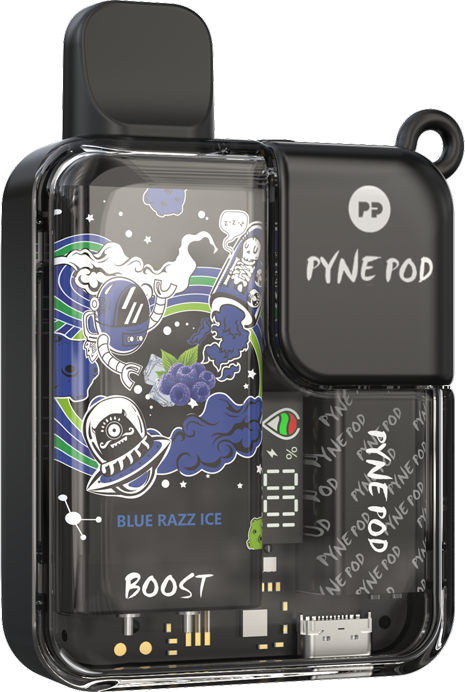
Looks like one of them is Pyne Pod: https://www.pynepod.com/uploads/bd58c18e.png
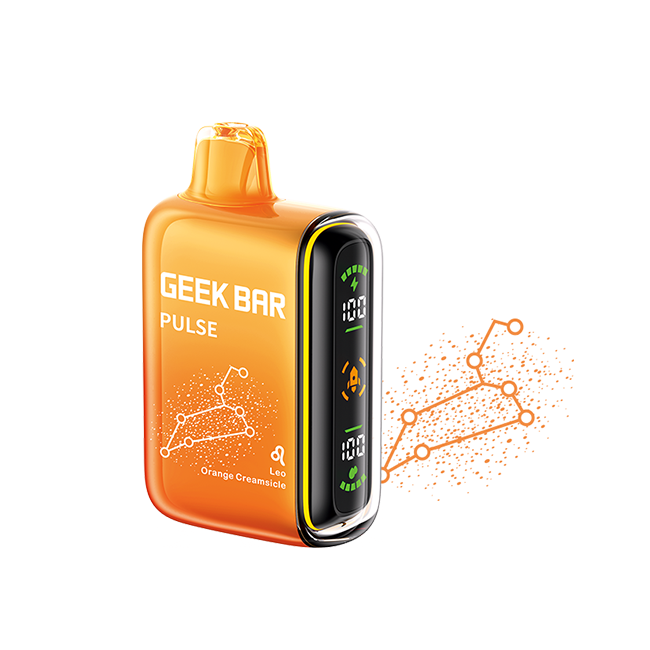
The Geek Bar Pulse has the custom multi-segment on the side: https://oss.geekbar.com/products/meloso-ultra/2/Orange%20Cre...
dejawu commented on Disposable vapes to be banned in England and Wales bbc.com/news/articles/cd7... · Posted by u/nithinj
An ex of mine used disposable vapes and I was shocked by how beautifully designed some of them are - transparent covers with visible inner workings reminiscent of the Nothing phones; custom multi-segment displays for battery and temperature status; original artwork printed in vibrant color on the side. It made me even angrier that these things are meant to just be used once and then thrown out. Of course putting all this e-waste into the environment is a disaster, but to then also treat art and design as similarly disposable feels heartbreakingly cynical on another level entirely.
I collected a few that she was going to throw out, someday™ I'll build some driver boards for the displays and make a little art piece out of them.
The worst toast I've seen is on Android Auto (itself already a veritable petri dish of awful UX) where, when the on-screen keyboard appears, a toast helpfully pops up informing you that a keyboard is also available on your phone... Thus blocking the on-screen keyboard from being used until the toast fades (and no, tapping it does not dismiss it).
dejawu commented on Show HN: DualShock calibration in the browser using WebHID blog.the.al/2024/04/09/du... · Posted by u/al_al
Chrome is doing amazing work with these WebAPIs. Here's a quick list of things enabled by Chrome being open-minded and allowing WebHID and WebUSB APIs to exist:
- Turn your Stadia controllers into bluetooth controllers: https://stadia.google.com/controller/index_en_GB.html
- Android Flash Tool: https://flash.android.com/welcome
- fastboot.js - FastBoot API but entirely though the web: https://kdrag0n.github.io/fastboot.js/demo/
- WebADB - Android debugging interface through the web: https://app.webadb.com/
and here's my favorite (because I used it in my RX-8)
- Node-Carplay - Carplay interface through a USB dongle in your browser with no external dependencies!!1! (https://github.com/rhysmorgan134/node-CarPlay)
Add to that list QMK VIA, which allows reprogramming a keyboard running the QMK firmware from the browser!